
Storytelling Series
for the South Carolina Environmental Law Project
This project was part of a broader marketing strategy designed to highlight the human and community impacts of the work of this nonprofit environmental law organization. I was able to travel to meet several of the subjects, interview and photograph them, and see firsthand how they were being impacted by the environmental harm in their communities. We deployed these stories across multiple channels, including a printed newsletter, appeal emails, and social media.
Below are two of my favorite stories from the series, as well as my accompanying photographs.
Learn more about the South Carolina Environmental Law Project here.
The Community by the Creek
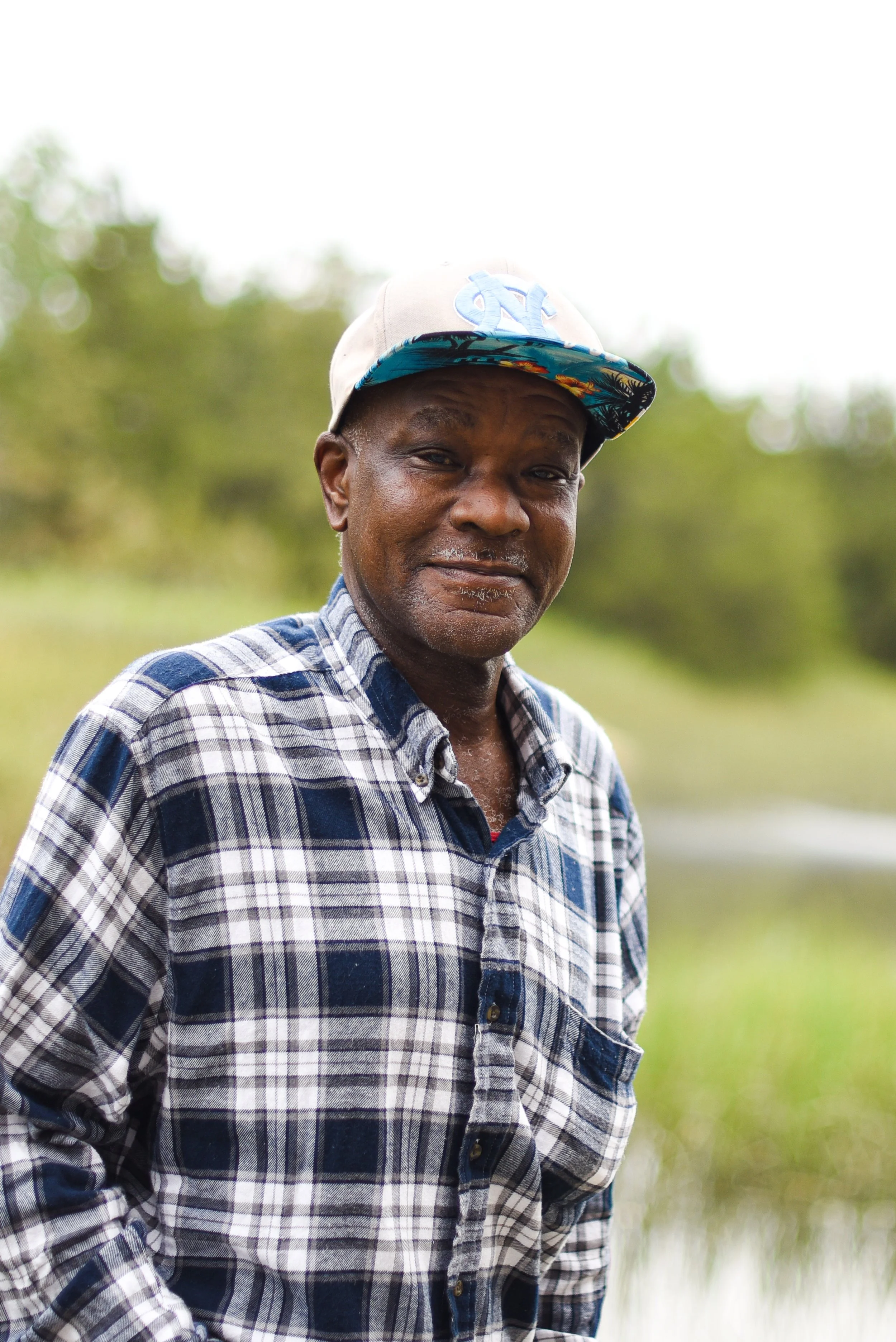
The tide is coming in, but not enough to fully submerge the cluster of worn, red bricks peeking through the pluff mud on the banks of Gadsden Creek. We’re walking past patches of marigold sea oxeye and tall marsh grasses swaying in the breeze, listening to Franklin tell stories of wading knee deep into the water to catch crabs.
“This creek means a lot,” he says. His gaze fixes on the bricks. “Being a little boy, I used to enjoy it. When they tore down [the old apartments], they didn’t want the bricks. We used to sell the bricks for money.”
Franklin has been a part of the Gadsden Green community his entire life. Born just down the street at the Medical University of South Carolina, many of his core memories center around the formerly expansive salt marsh and tidelands. From swimming with friends as a young child to walks with his children and granddaughter, he lovingly reflects on his lifetime of experiences at the creek. Experiences that mirror those of the Black community in Charleston for over 150 years, as the waters served as a place for baptisms, swimming, bathing, and fishing for generations.
Throughout the ebbs and flows of passing time, the creek has remained a constant fixture in the neighborhood – a source of comfort and connection, tying the past to the present. “It’s been a safe place for people to go,” Franklin explains. “I hope they leave it up, just to try and right the wrongs.”
The wrongs he speaks of—the slow destruction and filling of the marsh at the expense of his community—are many.
Beginning in the 1950’s, shortly after the construction of Gadsden Green, the city used the wetlands in the area as a landfill, receiving an after-the-fact permit from the Army Corps of Engineers in 1971. The literal tons of municipal waste in the backyards of residents slowly filled in coastal water resources, contributing to the flooding that still occurs in the neighborhood today.
Now, the WestEdge Foundation, Inc., a non-profit entity created by the City of Charleston and the MUSC Foundation, wants to excavate and fill Gadsden Creek to increase the already developable uplands to over 30 acres for a residential and commercial development.
When Angela moved to Gadsden Green eight years ago, she was met with advice from her new neighbors. “One of the first things they teach you when you live here is how to strategize to get around the water,” she explains. “Everybody’s got to go to work. They’ve got to go to school. You’ve got to keep living there. So, you learn to navigate around the flood water.”
Angela and other community residents fear that the proposed development and elimination of the last remaining wetlands will worsen flooding—and that the flooding will be used as an excuse to tear down their housing and further gentrify the area.
In the face of accelerating sea level rise, the paving over of one of the last tidal creeks on the peninsula with concrete seems shortsighted at best. After all the community has endured, removing their last access to a resource they would never be able to get back would be an unacceptable gamble, especially when valid alternatives to remedy the flooding exist.
The deep connections she has made in the eight years she’s lived there are evident as neighbors pass by and strike up friendly conversations.
She believes Gadsden Creek is more than just a quiet refuge on the edge of her beloved community. It’s a symbol of the resilience of her neighbors, in the face of all the past and present harms inflicted upon them. Like the faded bricks that refuse to let time and sediment cover them up, Gadsden Green residents and other advocates, like Friends of Gadsden Creek and Charleston Area Justice Ministry, have not backed down in their fight to save the creek.
Both Franklin and Angela also have concerns about the removal of the creek worsening heat levels in the neighborhood. They worry about rapidly increasing energy bills or energy outages that might cause catastrophic health events. Their worries are backed by scientific data.
Since 2020, a group of scientists have been studying heat levels in Gadsden Green as part of the Charleston Heat Health Research Project, funded by the National Oceanic and Atmospheric Administration. This ongoing study has identified Gadsden Green as having some of the most intense heat levels on the peninsula—up to 12 degrees warmer than other areas of the city on any given day in the summer. On a cloudy day last year, scientists measured pavement temperatures topping 118 degrees. “Heat islands” like their community have many impacts on residents, including increased consumption of energy, elevated levels of greenhouse gas emissions and air pollution, and compromised human health.
As we walk down the sidewalk on Allway Avenue, a young boy passes by on his bike, flashes a huge grin and says hello. “It’s wonderful to see children outside playing,” Angela says. She hopes that if the creek is eventually saved and revitalized, the green space can continue to be a place for the youngest generation to enjoy the sights and sounds of nature in the middle of the city.
Franklin pauses to look out over the water at the widest portion of the creek. It’s almost as if the memories he’s been recounting come flooding back, all at once. He says he’d like to see the creek revitalized, too. It’s clear that the neighborhood treasures Gadsden Creek and all it has meant to the area for over a century. It’s also clear that paving it over with concrete could exacerbate flooding and heat levels while continuing the pattern of destruction and taking of community resources. And, it’s clear what the right thing is to do for the community and the creek they hold so dear.
Learn more about Gadsden Creek by visiting the Friends of Gadsden Creek website.
Protecting the Little River Watershed
If you ask any South Carolinian what their favorite place in the state is and what it means to them, be prepared for an earful. For some it’s an island with a wide, sandy beach they grew up visiting as a child—perhaps Edisto or Pawleys. For others it’s a stunning mountain vista, like the overlook at Caesars Head State Park, or a creek running alongside a favorite hiking trail.
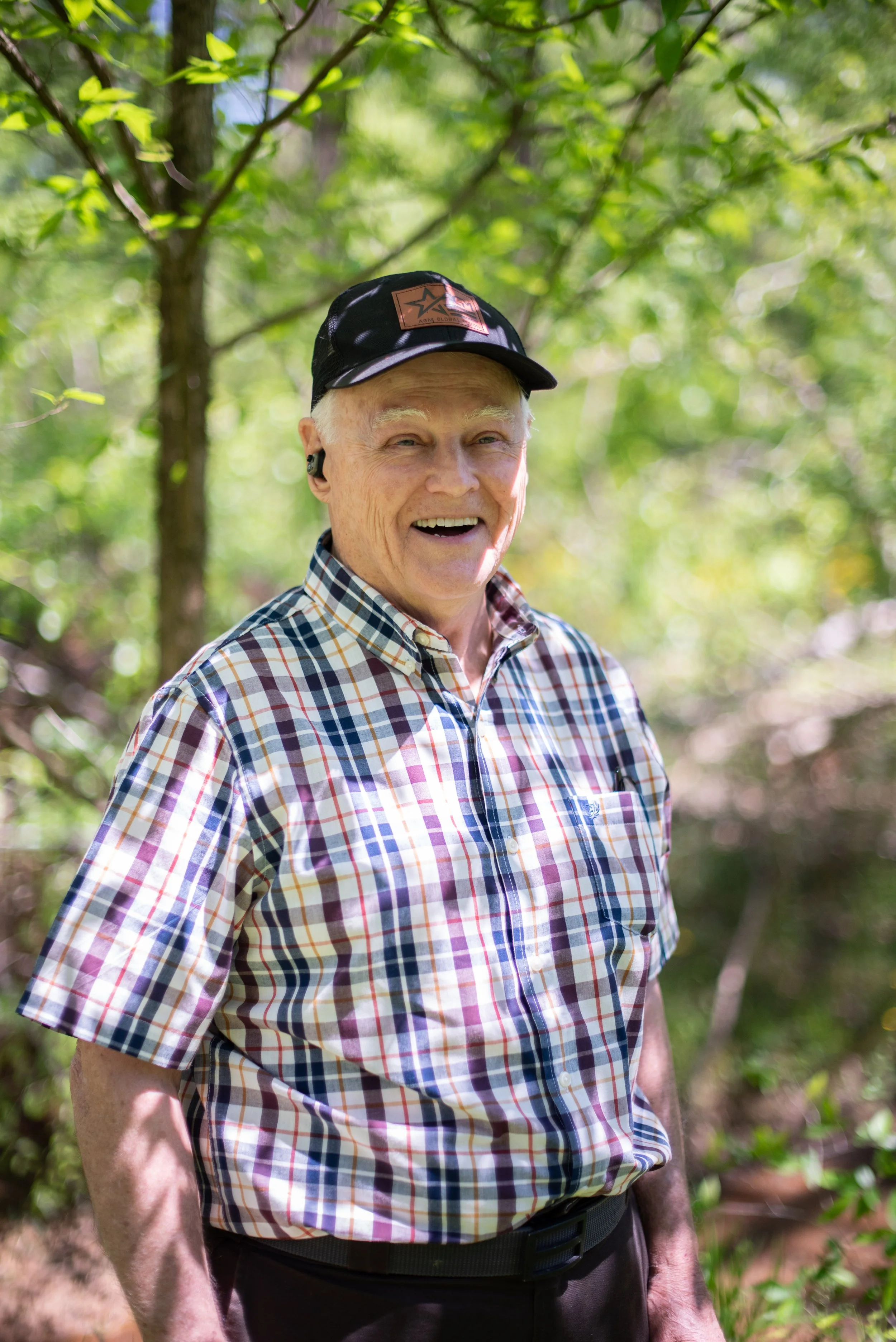
For Charles Blackmon, that sacred place is the Little River—a quiet, dark stream meandering through banks lined with golden wildflowers and mature hardwood trees. The land surrounding parts of the river have been in his family since the 1760s, and it holds a special place in his heart. It’s also a safe haven for a wide range of species, including fish like brim and bass, hawks, owls and woodpeckers and dogwood and willow trees.
But the river where Blackmon spent hours wading and fishing as a young boy is under threat from concentrated animal feeding operations, or CAFOs. Fifty-seven industrial poultry barns, packing in hundreds of thousands of chickens, already overburden a four-mile stretch in his small community of Mountville in Laurens County. And now, the Department of Environmental Services has greenlighted sixteen new barns in the area, which would hold 528,000 broiler chickens and result in an additional annual litter production of 3,220 tons of manure.
The problem? Polluted runoff from the massive amounts of waste generated from chicken farms is contaminating the river, which empties into the Saluda River and eventually flows into Lake Murray west of Columbia. The new barns would be perched on a slope above the river banks—dangerous siting that would seem an obvious recipe for disaster.
Levels of fecal coliform bacteria in the river are high enough to prompt an active Department of Environmental Services cleanup plan—yet, the same agency still approved the new barns. The river is no longer safe for new generations of children to wade, fish or catch frogs in—a loss of natural resources that Blackmon has been fighting to re- cover for over nine years.
Alongside neighbors in Mountville with similar worries and experiences, Blackmon formed an organization called South Carolinians for Responsible Agricultural Practices, or SCRAP.
SCELP has been helping SCRAP fight the new barns in court. Last July, we filed a challenge to the permits in the Administrative Law Court. Unfortunately, the Court granted the broiler companies’ request to dismiss our case at the end of 2024. But SCELP and our partners at SCRAP aren’t giving up. In February, we appealed the decision to the Court of Appeals and are currently researching and drafting our legal arguments to submit to the Court.